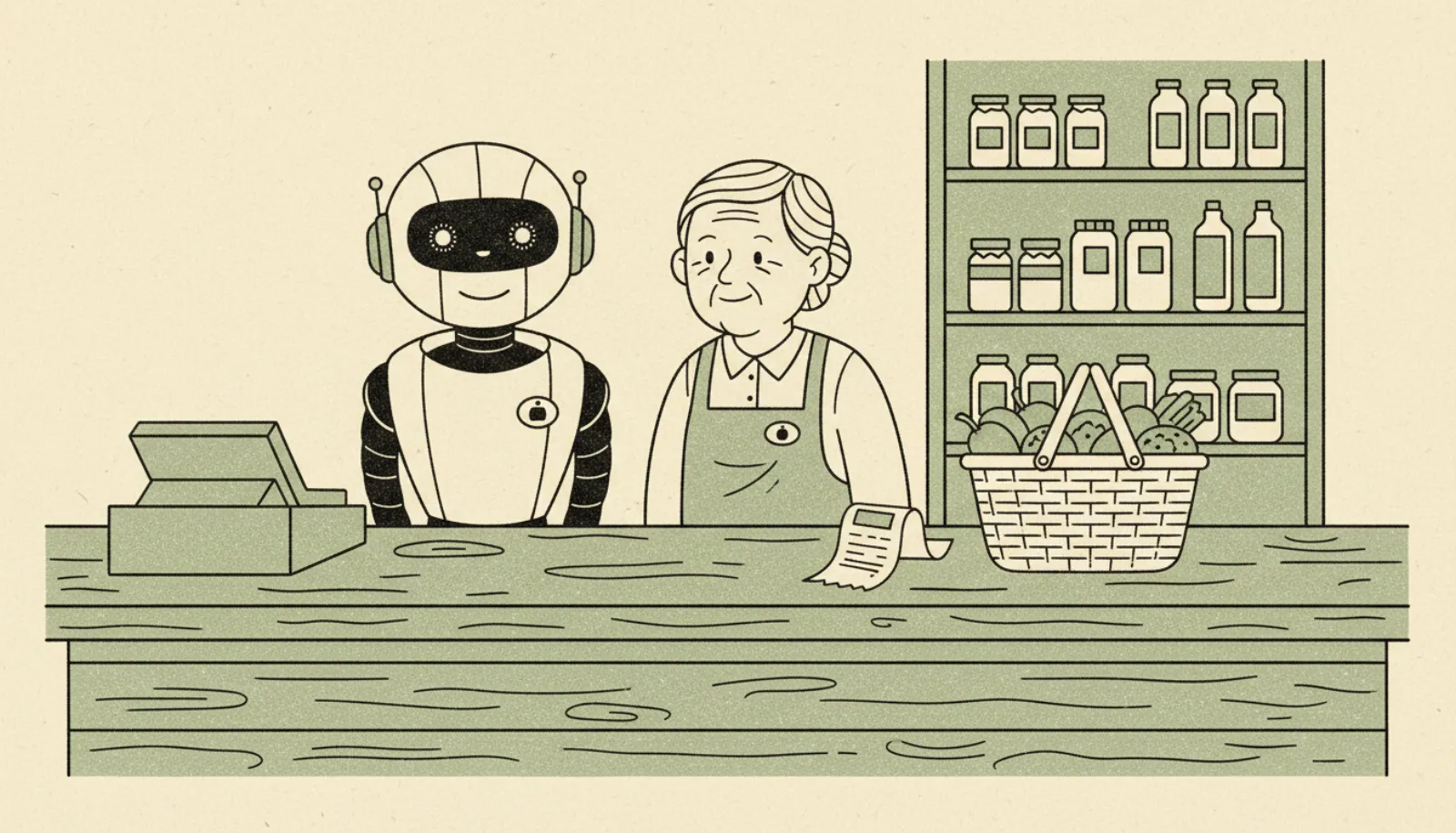
A UK small business can run an AI agent on WhatsApp in 2026, as long as the agent serves its own customers. Meta's ban from 15 January 2026 targets general-purpose AI assistants such as ChatGPT, not a café, salon or shop using AI to answer its own customers. The harder questions are UK ones: consent for marketing under PECR, the new fine levels, Meta's message charges and the fact that you answer for whatever the agent says.
This guide is based on Meta's developer documentation, UK legislation, ICO material and legal commentary as of November 2026. We have not set up or tested a WhatsApp agent hands-on. For the wider picture, see our guide to AI agents for UK small businesses.
It is general information, not legal advice.
Is a business AI agent on WhatsApp allowed?
Yes, for customer service. Meta added an "AI providers" section to the WhatsApp Business Solution terms, which took effect for all users on 15 January 2026. It bars bots whose primary function is a general-purpose AI assistant, according to respond.io. ChatGPT and Microsoft Copilot both left WhatsApp when it took effect. Businesses using AI for their own customer support are not affected.
So these are fine:
- a salon bot that books and moves appointments
- a shop bot that answers questions about orders, returns and opening hours
- a restaurant bot that takes table requests and answers menu questions
What is not allowed is a WhatsApp number whose main job is to be a general chatbot for anyone, about anything.
Does the EU ruling change things in the UK?
No. On 9 June 2026 the European Commission imposed interim measures requiring Meta to restore free WhatsApp access for rival AI chatbots (WTOP). By mid-July ChatGPT was back on WhatsApp for users with EEA phone numbers. The UK is outside the EEA, so the order does not apply here. It also made no difference to business customer-service bots, which were never banned.
- Meta's ban on general-purpose AI assistants takes effect
- Data (Use and Access) Act automated decision-making rules take effect
- CMA publishes guidance on businesses' AI agents
- EU interim measures restore chatbot access in the EU only
- Meta starts charging for service messages
What does it cost to run?
There are two bills: Meta's message charges and the AI platform's fees.
Meta. Since 1 October 2026, Meta charges per message for service messages, the replies you send inside a conversation a customer started. Each business phone number gets 1,000 free delivered service messages a month, and unused ones do not roll over, according to Meta's pricing page. Eligible government and non-profit organisations stay free beyond that tier until 31 December 2027. Marketing messages are charged separately.
The AI layer. Helpdesk AI is usually priced per result, in US dollars:
| AI platform (as of November 2026) | Price | Notes |
|---|---|---|
| Intercom Fin | $0.99 per outcome | Charged at most once per conversation; monthly minimum with an existing helpdesk |
| Zendesk | $1.50 committed or $2.00 pay-as-you-go per automated resolution | Some plans include 5 to 10 per agent a month |
Sources: Intercom, Zendesk. Neither publishes a UK price, so your bill in pounds depends on the exchange rate and VAT.
- Meta ban on general-purpose AI assistants
- 15 Jan 2026
- Free service messages per number per month
- 1,000
- Maximum PECR fine under the DUAA
- £17.5m or 4%
- Intercom Fin price per outcome
- $0.99
Do you need consent to message customers?
For service replies to a customer who messaged you first, consent for marketing is not the question; you are answering them. For marketing, the rules are stricter.
PECR requires prior consent before sending marketing texts to individuals. The main exception is the soft opt-in, which covers existing customers who:
- bought, or negotiated to buy, a product or service from you
- are being sent marketing about your own similar products or services
- were offered a simple way to opt out when you collected their details, and are offered one in every message
The soft opt-in cannot cover third-party marketing. The Data (Use and Access) Act 2025 extended a version of it to charities for supporters of their charitable purposes; the ICO has guidance on the charitable soft opt-in. Our sister site covers the PECR rules for AI text messages in more detail.
Does PECR cover WhatsApp?
PECR clearly covers SMS. We found no source in our research that settles how it treats WhatsApp messages, so we do not state it either way. The safe approach is to treat WhatsApp marketing as if PECR applies: get consent or rely on a valid soft opt-in, and offer an opt-out in every marketing message.
What can the fines be?
The Data (Use and Access) Act 2025 raised the maximum PECR fine from £500,000 to £17.5 million or 4% of global turnover, according to MFMac. The ICO continued to fine firms for electronic marketing breaches in spring 2026 (RPC). "The AI sent it" is not a defence. Our Data (Use and Access) Act explainer covers the other changes.
Who is responsible for what the agent says?
You are. CMA guidance published on 9 March 2026 says businesses are responsible for their AI agents in the same way as for their employees, even if a third party built the agent. If your WhatsApp bot misstates a refund policy, invents a discount or gets a price wrong, that is your business's problem under consumer law. The CMA can fine up to 10% of worldwide turnover. See our CMA guidance explainer.
UK GDPR also applies to the chats. Your privacy notice should explain that you use an AI provider and what happens to customer messages. Our guide to the ICO and AI agents covers data rights.
- Keep it to serviceUse the AI for your own customers' questions, bookings and orders.
- Separate marketingOnly send marketing with consent or a valid soft opt-in, with an opt-out every time.
- Write guardrailsGive the bot your real prices, policies and hours, and tell it to hand over when unsure.
- Offer a humanMake it easy for a customer to reach a person.
- Check the billTrack service messages past the free 1,000 and the AI platform's per-resolution fees.
- Update your privacy noticeName the AI provider and explain how chats are used.
Who it's for
This guide is for UK sole traders and small firms thinking of putting an AI agent on their WhatsApp Business number. The short version: customer service with AI is allowed and fairly cheap at low volumes, but marketing needs consent, the fines are now large, and you answer for every reply. If you also want an AI agent for your own admin, see ChatGPT Business Premium for sole traders.