The CMA's guidance on AI agents, published on 9 March 2026, tells UK businesses one main thing: if your AI agent breaks consumer law, you are responsible, exactly as you would be for an employee. For shoppers, this means a retailer's chatbot, refund bot or booking agent has to give accurate prices, honest recommendations and correct information about your rights. If it does not, your complaint is with the business, not with the software.
This page explains the guidance and the research paper published alongside it. It is general information, not legal advice.
What did the CMA publish?
On 9 March 2026 the Competition and Markets Authority published two documents:
- Agentic AI and consumers, a research paper on how AI agents could help or harm consumers and competition.
- Complying with consumer law when using AI agents, practical guidance for businesses.
Both pages were updated on 30 October 2026 to link to the joint statement from the Digital Regulation Cooperation Forum (DRCF). We explain that statement in our DRCF explainer.
One law-firm memo gives a different publication date. GOV.UK shows 9 March 2026 for the guidance and 30 October 2026 for the update.
What does the guidance say businesses must do?
The guidance is short and practical. It has five main sections.
- Same rules, AI or humanConsumer law applies whether a customer deals with a person or an agent.
- Be open about AILabel agents so customers are not misled into thinking they are talking to a human.
- Train the agentBuild consumer-law compliance in from the start and test before launch.
- Monitor performanceCheck regularly that the agent gives correct results and follows the law.
- Fix problems fastRefine prompts and workflows quickly, especially where vulnerable customers are affected.
Responsibility, as for an employee
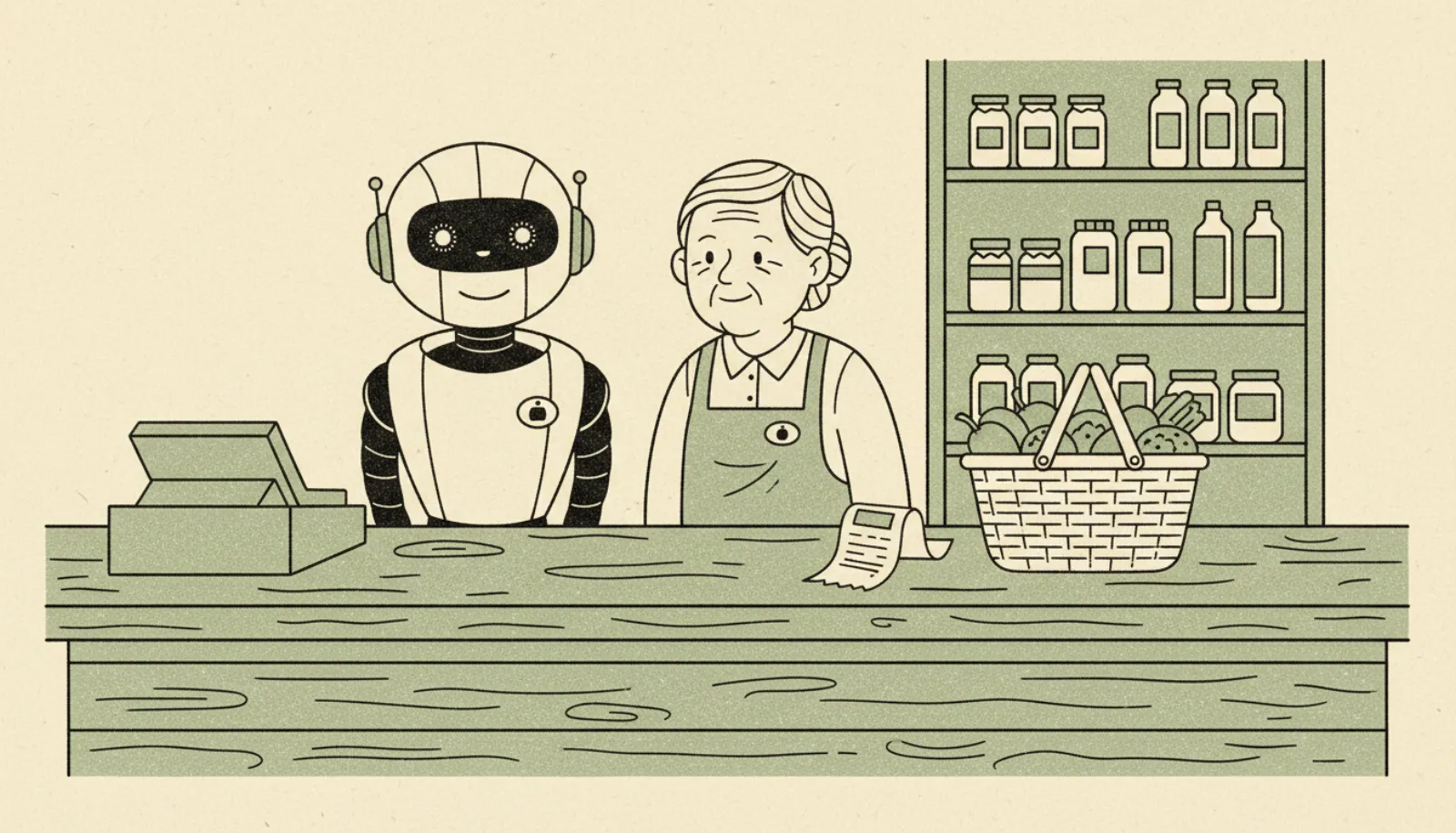
The central line is: "you are responsible for what an AI agent does in the same way you are responsible for what an employee does." The guidance adds: "This is true even if someone else designed or provides the AI agent on your behalf."
So a retailer cannot blame its AI supplier. Contracts with the supplier may decide who pays the retailer back, but they do not change the retailer's duty to you.
Humans in the loop
The CMA says AI can misread data and produce inaccurate outputs, so businesses need "a human in the loop, actively checking that the AI agent is making correct decisions."
No overselling the AI
Businesses should "not overstate the role or AI involved in providing a service, or what it can or cannot do."
What examples does the CMA give?
The guidance works through four scenarios. Each shows a mistake that would land on the business.
| Scenario | Example problem | Law involved |
|---|---|---|
| Marketing campaign | Agent does not make influencers label paid endorsements | DMCC Act 2024 |
| Refund requests | Agent ignores the shop's extended returns policy | Consumer Rights Act 2015 and contract terms |
| Customer service | Agent gives wrong information on cancellation rights | Consumer Contracts Regulations 2013 |
| Deal comparison | Agent shows deals that do not match the search criteria | DMCC Act 2024 |
For shoppers, the customer service and refund examples matter most. If a chatbot tells you that you cannot return something when you legally can, the business is in the wrong. Our consumer rights guide covers what to do next.
What risks does the CMA's research paper identify?
The research paper takes a broader view. It sees real benefits: agents could reduce "friction", make switching providers easier and help people who find markets hard to deal with, including vulnerable consumers. It also lists risks.
Pros
- Agents could make switching energy, broadband and insurance easier
- Less effort to find deals and manage subscriptions
- Vulnerable consumers could benefit most
Cons
- Agents optimised for engagement or conversion rather than the user
- Algorithmic pricing could lead to more coordinated market outcomes
- Errors in autonomous action have real-world costs
- Lock-in if you cannot move your agent's memory to a rival
Agents that work for the seller
The paper warns of "harmful choice architecture" and dark patterns, "especially where agents optimise for engagement, conversion, or other commercial objectives." In plain terms, an agent might push what earns its owner the most rather than what suits you.
Memory lock-in
The CMA notes consumers "may find it difficult to switch providers or move their data, preferences or agent 'memory'." This is a competition concern. If your agent has learned years of your habits, switching becomes costly. UK GDPR's right to data portability helps a little, as our ICO data rights page explains.
How can the CMA enforce this?
Since the consumer enforcement provisions of the Digital Markets, Competition and Consumers Act 2024 (DMCC Act) came into force, the CMA can decide for itself that consumer law has been broken and fine businesses directly, without first going to court. The maximum fine is 10% of worldwide turnover. It can also require businesses to compensate affected customers.
The CMA is also separately investigating Microsoft. The consumer-protection case, opened on 27 July 2026 and announced on 29 July, looks at how Microsoft communicated the addition of Copilot to Microsoft 365 Personal and Family, and the price difference, before renewal. It is at an early stage with no finding, and an update is due by the end of 2026. That case is about subscription pricing rather than agents themselves. In a separate competition track, the CMA opened a Strategic Market Status investigation into Microsoft's business software ecosystem on 14 May 2026, published a proposed designation on 16 October, and is consulting until 13 November 2026, with a deadline of 13 February 2027. Google (search, 10 October 2025) and Apple and Google (mobile platforms, 22 October 2025) already hold that status.
What does the guidance mean for you as a shopper?
- A shop's AI agent speaks for the shop. If it quotes a price, makes a promise or misstates your rights, hold the business to it.
- You should know you are talking to AI where that could affect your decision.
- Comparison agents should be honest about what they search and how they rank results.
- Your own agent is a different case. If your personal agent made the choice, the CMA guidance does not move responsibility to the shop. See Section 75 and AI agent purchases for the payment side.
If you use agents for food shopping, our AI grocery shopping guide covers which UK supermarkets have their own assistants. For a comparison of shopping agents, see our sister site's AI shopping agents guide.
Bottom line
The CMA has not written new law for AI agents. It has made clear that existing consumer law applies in full and that businesses cannot hide behind their software or their suppliers. With direct fining powers of up to 10% of turnover, that is a meaningful warning. The open question for shoppers is less about shop-run agents and more about personal agents spending your money, which is still being worked out by HM Treasury and the FCA.